Thursday, May 13, 2010

Twinkie Deconstructed

This is what I learned upon completing Steve Ettlinger's Twinkie Deconstructed.

Everything we eat comes from rocks, corn and petroleum.

Okay, that's an oversimplification, but Ettlinger's journey through processed food kept coming back to those three things as the starting point of many ingredients. Yes, we're dependent on foreign oil for so much more than just fuel for our SUVs.

Ettlinger's book started with a question from his son. While perusing a Twinkie wrapper, he asked where polysorbate 60 comes from. Ettlinger eventually set out on a journey to trace the history of all the ingredients on the Twinkie label. He travelled through numerous factories and underground mines to locate the source of twinkie-ness.

This list, from his website, gives a breakdown of where it all comes from.


THE TWINKIE NEXUS of INGREDIENTS
The Twinkie-Industrial Complex of Twinkies’ Raw and Final Ingredients
As Described in
Twinkie, Deconstructed
ANIMAL:
chickens – whole eggs
cows - whey, caseinate, animal shortening
bacteria, yeast, fungi – vitamins B1 and B2, folic acid, corn syrup, high fructose corn syrup, dextrose, glucose, sodium stearoyl lactylate, polysorbate 60, whey
VEGETABLE:  
corn – corn syrup, high fructose corn syrup, cornstarch, modified cornstarch, corn dextrins, dextrose, glucose, corn flour, polysorbate 60, sodium stearoyl lactylate
soy – soybean oil, partially hydrogenated vegetable shortening, soy protein  isolate, soy lecithin, sodium stearoyl lactylate
canola – shortening, sodium stearoyl lactylate
cotton - partially hydrogenated vegetable shortening, sodium stearoyl lactylate, cellulose gum
wheat – flour
palm trees - partially hydrogenated vegetable shortening, mono and diglycerides, sodium stearoyl lactylate
olive oil – mono and diglycerides, colors
sugar cane  - sugar
sugar beets – sugar
vanilla orchid – natural flavor
trees – cellulose gum
MINERAL:
crude oil or natural gas - artificial vanilla, artifical butter flavor, artificial colors, vitamins, sorbic acid, polysorbate 60, sodium bicarbonate, cellulose gum
limestone – monocalium  phosphate, calcium caseinate,  whey, SSL
phosphorus – monocalcium phosphate
trona - sodium bicarbonate, sodium stearoyl lactylate
salt - salt, bleach, colors (and as source of lye and HCl in all processing)
gypsum – calcium sulfate  
iron – ferrous sulfate
air – ammonia for nitric acid for niacin and colors
sulfur – ferrous sulfate
water – water
Mmm. Tasty.

I've been reading books by Michael Pollan and watching Food Inc and generally trying to be more aware of what I'm eating. This nook was another big step toward encouraging me to avoid prepackaged, processed foodstuffs. 

My favorite example, from early in the book, comes from the reveal of how iron gets into enriched flour. Of course, enriched flour is a good thing, with the added vitamins & minerals helping to eliminate the (now forgotten) disease pellagra. (Although if everyone ate a balanced diet and used whole wheat flour we wouldn't need enrichment, we'd be getting all the vitamins & minerals we need.) Now, when you make iron into steel, a big coating of rust covers the steel. So it's bathed in sulphuric acid, where the rust falls to the bottom, ultimately getting separated from the acid then ground into powder and sprinkled into flour. Voila! You've just enriched your flour with iron.

Yummy!

And so it goes, from oil refinery to chemical processing plant to your mouth.

Ettlinger's a good writer and, though the process becomes somewhat repetitive with yet another chemical plant extracting yet another oil-based ingredient, it's a great look at where we get all the packaged stuff that lines grocery store shelves - and is slowly killing us all.

Bon appetit! 

Friday, May 7, 2010

A Hard Rain


I pulled into the church parking lot and nearly ran over Satcom 5.  It lay on the pavement, shattered, flattened, like something attached to the back of Wile E Coyote after he smacked into the side of a mountain. The four solar panels spread out like cracked mirrors, still attached to the central core. Even from a distance I recognized the remains of the American flag painted on its side.

I stopped the bus and told the kids to sit tight.

Tendrils of smoke rose from broken components, the burnt electric smell stinging my nostrils. I kneeled, trying for a closer look. Couldn’t have been here long. Fresh. I glanced around, but the church grounds were still empty in the dawn light. I still had time to clean it up before the Fire Brigade caught whiff of the wreck.

“Joey,” I shouted toward the bus. “Grab a bucket.”

We swept up what we could, salvaged a few bits and bobs and shoveled the remains into a ditch behind the Family Life Center. Joey and a few of the older boys covered the whole pile with leaves.

 “When will it stop raining satellites?” Joey asked.

“I don’t know, son.” We put our tinfoil hats back on. “I don’t know.”

Thursday, May 6, 2010

Rosebud


In honor of Orson Welles birthday, here is a list of books I’ve read about him over the years.

I owned Pauline Kael's Citizen Kane Book for years before finally reading it. I remember it as an evisceration of Welles and epistle to writer Herman Mankiewicz.

Then I read Road to Xanadu by Simon Callow and was just completely mesmerized by it. The book is amazing, as was Welles’ early life. Absolutely essential reading.

I loved the book and Welles so much afterward that I started seeking out more about him.

This is Orson Welles is a compilation of interviews Welles did with director Peter Bogdonavich. Amusing and anecdotal, like sitting in a room with Welles for a few hours.

Moby Dick – Rehearsed is a play written by Welles, an adaptation of the novel which I bet made for a riveting evening of theatre.

The Big Brass Ring is a screenplay by Welles that got made by others after his death.

Orson Welles by Joseph McBride is one of the other main bios of Welles and I don't recall a lot of details about it, but know I enjoyed it.

The Theatre of Orson Welles by Richard France was more of an academic book, one I got through interlibrary loan. Callow's book made me really wish I could have seen Welles' live productions with the Mercury Theatre and this helped flesh out more of that. 

I got Callow’s second volume, Hello Americans, shortly after it was released but I’m just now getting a chance to read it. Can’t wait.

Well, there you go. I told you it would be pretty much a list.

Saturday, April 24, 2010

Oldest Trick in the Book

Burt shoved the gun against my forehead.

“Cute,” he said. “Very cute.”

“Thank you,” I stammered.

“Reese never mentioned you were funny.” He moved the gun to my chest and whispered in my ear. “I hate funny.”

“Me, too,” I said. “And clichés. I hate clichés.” Crap. Couldn’t stop myself.

Burt jammed the muzzle into my ribs.

“Are you saying I’m a cliché?”

“Just your dialogue,” I replied. “I mean, come on, ‘I hate funny.’ It’s like an episode of Rockford Files or something.”

“You want to see a cliché? I got a cliché for you. How about the dead guy with a big hole in his head?”

“You’re actually pointing at my heart right now.”

“Shut up!”

Ouch. He’d shouted that right into my ear.

“Listen,” I said. “Let’s just go back to Reese and talk to him. I’m sure he’ll understand if I can just explain it to him.”

“Explain it to me, funny man.” Burt took a step back, the gun still pointed at me. “Go ahead.”

“Well,” I began, casually stepping toward him, “it’s like this.”

Burt reflexively took another step back. And dropped into the open manhole.

“Whoopsie,” I said, grabbing Reese’s briefcase and heading off to the airport.

Turns out I’d lied to Burt. Actually, I love clichés.

Sunday, April 18, 2010

New Short Story Published - Marathon

I've had a new short story published over at Pow Fast Flash Fiction.

Please check it out here.

Tuesday, April 6, 2010

5 Things I Learned from David Lynch

Like most of mainstream America, my first exposure to the work of David Lynch came with the release of The Elephant Man, his first bigtime Hollywood production. Bankrolled by Mel Brooks, the film was striking and, except for the strange elephant-noise collage sequences, pretty straightforward in a narrative sense. It provoked a lot of discussion with my fellow high schoolers and I, for one, loved the use of black and white.

Next up was Dune, a film that came with a crib sheet handed out at the box office. I again enjoyed a lot of the visuals in the film and really dug the atypical soundtrack music by the (unfamiliar to me, because I am a nerd) rock band Toto. I’d tried to read the novel Dune several times in high school and never made it past, oh, 1/3 of the way into the book. I was therefore startled when nearly the entire film consisted of ideas and scenes that I’d read in the novel. I guess that’s why the SciFi Channel ended up doing a miniseries version years later.

Then came Blue Velvet. So disturbing. So strange. So wonderful. I loved it. And when I read (in Rolling Stone, trying to temper my nerdosity) a couple years later that Lynch was developing a new TV series, I couldn’t wait to see it.

Twin Peaks absorbed my thoughts and attention in a way no other TV show had since, I don’t know, Star Trek when I was a kid. And I couldn’t wait to see Wild at Heart upon its release. I’d become a Lynch junkie. I sought out his Industrial Symphony. I spent hours listening to Julee Cruise. I baked pies. I considered drinking 14 cups of coffee a day, as he reputedly did. I thought of ways to come up with images and scenes that were seemingly tangential to the main scope of a piece.

By the time Twin Peaks, well, peaked, I’d come down from my Lynch high and the Twin Peaks movie Fire Walk With Me didn’t help restore the luster. I saw and enjoyed (if it’s actually possible to say you “enjoyed”) Lost Highway but I haven’t seen any of his other, later films.

But those critical years also taught me a lot about the nature of creativity.

  1. Read the Art Spirit by Robert Henri. This book was mentioned by Lynch a couple of times in interviews, so I sought it out. It’s addressed primarily to visual artists, painters, but there is so much in there that applies to the creative process in general. I gave away my first copy to another writer I thought would appreciate it. The takeaway message I got from Henri was about focus, about paying attention to the moment, of fully investing yourself in the creation of a work. Be there, let it flow out and don’t second guess and rearrange and fret. Let it flow. I should probably read it again soon.
  2. Diversify. Lynch is a writer, director, painter, sculptor and musician. He works in film, television, stage and galleries. He hits and misses. He doesn’t put all his eggs in one basket. He lets his muse tell him which way a particular idea should be expressed. He lets it flow. Again with the flow.
  3. Put a fish in the percolator. One of the strangest and most wonderful moments in early Twin Peaks comes from Pete, the odd fellow who first discovers the body of Laura Palmer. Pete offers Agent Cooper some coffee and, just as Cooper takes a sip, Pete warns him not to drink it – “There was a fish in the percolator.” It’s an image that makes you laugh and then makes you try to figure out why there would be a fish in a percolator. It’s nonsensical and, quite possibly, the first time that phrase has ever been uttered anywhere in any language. Lynch creates unique moments that, with one line, can define a character. Doesn’t this say everything we might want to know about Pete? Stuck with a scene? Stick a fish in the percolator. Or find out what the log has to say.
  4. Damn good coffee – and hot! Yes, this is more Twin Peaks, but that whole coffee and pie thing helped reinforce that idea of living in the moment, of trying to fully appreciate where you are and what you are doing. Sip that coffee, smell it, spit it out if it’s too hot. And don’t just eat the pie, savor it. And don’t forget to thank the person who brought it to you.
  5. Go to extremes. Some of the creepiest moments in an already creepy film come when Willem Dafoe’s head separates from his body in Wild at Heart. And a dog walks off with a hand.  And both these moments are actually funny. I remember laughing and laughing when I saw the film. It’s okay to go to absurd lengths very once in a while. Wrap a girl up in plastic. Go ahead and start your film by tunneling underground to see ants, thus making explicit the implicit idea of your film. Don’t be afraid. Go where you need to go.

Thursday, April 1, 2010

Found Poetry, Almost a Haiku (Elvis)

If I have to kiss
another fat girl, I'll puke.
Where the hell are my pills?

Tuesday, March 23, 2010

Where No Man Has Gone Before

In which we meet Captain James R. Kirk and the valiant crew of the Enterprise as they venture beyond the great barrier at the edge of the galaxy.

The single most striking thing about this, the very first episode starring Captain Kirk, the second pilot film for the series, the episode meant to sell this whole venture as a series, is the way it begins: a chess game between Kirk and his alien science officer. No grandiose introductions to the vessel and its mission. No tedious assemblage of a team and shots of a captain getting his first command. No origin story at all. We’re simply thrust right into the action. This is the story of a captain and his crew and we learn everything we need to know about the ship, its mission and the dynamics between crew members by watching the story unfold. Even the opening title sequence lacks the traditional “These are the voyages” narration. We’re dropped into the future, onto a starship exploring the outer fringes of the galaxy, with almost no explanations for anything. Technology is taken for granted. When Kirk orders the Valiant’s stray recorder be brought on board, we cut to the transporter room and watch the machine appear on the platform. There’s no expository dialogue about dematerialization, no explanation given or necessary. We see it happen, we’re shown, not told, in the way the best stories are always handled. Just do it and trust the audience to figure it out.

Another striking element is the story itself and the overarching themes brought up. This is man versus god, or, more specifically, a man with godlike powers. It’s a theme Roddenberry will bludgeon us with over the decades to come, including the TNG pilot (where we spend a ton of time putting the crew together and learning their backstories before tangling with a being gifted with godlike powers). Roddenberry consistently presents humanity, raw and vicious as it can sometimes be, as ultimately preferable over omniscient hyperadvanced species. Maybe, somewhat ironically, he’s illustrating a verse from the  Bible (King James version): For in much wisdom is much grief: and he that increaseth knowledge increaseth sorrow.  We also get arguments about the merits of compassion and emotion, concluding with Kirk’s comment that there may be “hope” for Spock after all. Emotion, compassion, are vital elements, not just of a commander, but of a human being. Gary Mitchell’s use of superpowers robbed him of the capacity to identify with ordinary people, stripped him of his very humanity. As we learn over and over again in science fiction, with great power comes great responsibility.

Other elements that popped out at me, particularly with the benefit of seeing what happens in the future, are little things. Spock’s quick conclusion that Mitchell should be dumped off on a nearby planet (eerily reminiscent of young Spock’s actions in the latest Trek movie). The mention of the blonde lab tech Kirk almost married (which immediately brings to mind Carol Marcus). The ubiquitous Eddie Paskey.


Stylistically, the show is still finding its ground. The uniforms are noticeably different, in color, collar, and decoration. The bridge retains elements of the almost primitive look it had in the first pilot, The Cage. The phaser props seem too Flash Gordon-y, the communicator needlessly chunky, highlighting what a terrific job the production team did with redesigning things when the series fully launched itself. Also missing is the emotional core that McCoy provided. Dr. Piper is just another member of the staff, not the trusted advisor and deeply humanistic conscience Kirk comes to rely on. Spock is almost himself here, but still barking orders and acting a lot more, well, emotional. But Kirk is pretty much Kirk. Except, of course, that his middle initial is wrong on his tombstone. Makes me wonder if that got digitally changed in the “remastered” version.

Alexander Courage’s music here is mostly too melodramatic, but there are a few classic moments, especially the slow build when Mitchell starts reading faster and faster. His music here also demonstrates how much Fred Steiner contributed to the feel of the show starting with the very next episode, The Corbomite Maneuver. Sure, Courage wrote that bongo-inflected main theme and both Gerald Fried and Sol Kaplan wrote some of the most iconic moments for episodes much later, but Steiner is the true architect of the Star Trek sound and it’s noticeably absent here.

After the “too cerebral” pilot, Roddenberry delivered an episode that still manages to give its characters a lot of thoughtful dialogue while also upping the action quotient. In an earlier review of the latest Star Trek movie, a commenter pooh-pooh’ed my opinion because the original Trek was “thoughtful, provocative, while this was eye-candy.” This episode, Where No Man Has Gone Before, proves to be an excellent example of that very point. This is science fiction filled with ideas while at the same time giving us slam bang action. I loved the new Trek movie because it was tons of fun to watch, a rollicking good time no doubt enriched merely due to its heritage. I loved Where No Man Has Gone Before because it was a great story that made me want to find out more about these characters, this ship and this universe. And, thankfully, we’ve been given more for some 45 years and counting. 

Saturday, March 20, 2010

Surprised

This was a ten minute writing exercise.

A trip out of state, to a whole different state of mind. We flew from Iowa to Massachusetts for a week with my cousins. They lived on Cape Cod, on the ocean, where the salt air stung my nostrils and the water, even in July, seemed almost too cold to enjoy. Most of my five cousins were much older. One, much younger. The closest in age, Scott, was just enough older to be past the interests of a kid like me. He was nearly in junior high. My brother was young, maybe three, and not always much fun. So there was down time, solo time, even during a summer vacation trip, and I was drawn inexorably to the television.

My (then) current obsession, Lost in Space, was also airing way out in Massachusetts. But they were at a different point in the series than we'd seen back home. And when I wrote a postcard to Ronnie Dickey, a note to tell him about my trip, it only said this: "They show Lost in Space out here! Penny has short hair on the show. And the Robot is played by Bob May!" These were all astonishing facts. Penny was a long-haired girl in the episodes we'd been watching back home, and with no listing in the credits at the end of the show, we had no idea who stood inside the shell of the Robot. But the TV Guide in Massachusetts gave me the answer: Bob May. And I passed along this precious information to my friend Ronnie, secure in the knowledge that he would find it just as fascinating as I.
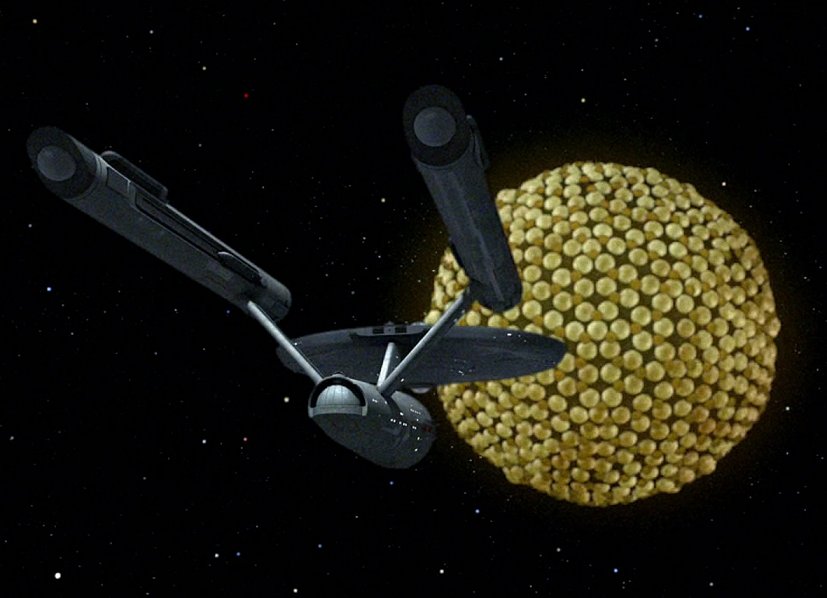
It was all about the TV and the space show of the moment. We'd already seen every episode of Star Trek twice or, in some cases, three times, and were thrilled when the adventures of the Robinson family expanded our space-related play.

Ronnie never told me his thoughts about the postcard. But a year or so later, I noticed it tacked onto the corkboard above his desk.

Thursday, March 18, 2010

Here, Basche!

This was a ten-minute writing exercise I did today.

Basche had a minibike.

That's what we called him, Basche. I'd moved to this school mid-semester and everyone already knew everyone else. I knew no one. On the playground I watched as Danny Kuiper tossed the football and then shouted, "Here, Basche! Here, Basche!" Inside, when the teacher asked if there was anyone in particular I wanted to have sit at my table, I said, "Basche." It may have been then that I found out his first name was David, but it may have been much later.

Danny Kuiper, who also sat at my table, was fast and wiry, with tight curls covering his head. Basche was tall, laconic and grounded. And someone we gravitated toward.

Basche cared about trucks and taught me to prefer Peterbilts to Macks. And when I visited his house I got to ride on the back of his minibike, tearing through the lot next door, playing Starsky and Hutch in pursuit of bad guys. Somehow, even though I had dark, Starsky-like hair and Basche a more blonde Hutch look, I had to be Hutch, because everyone knew Starsky was cooler. Just like when, years earlier, Danny Underwood and I played Emergency, and Danny had light hair, like Roy, and I had dark hair, like Johnny, but I still had to be Roy, because everyone knew Johnny was cooler.

As to the other Danny, Danny Kuiper, he remained more distant, another of Basche's sidekicks. Long after I'd moved away and lost contact with everyone at that school, I read in the paper that Danny had died, struck by lightning while working with his father on the roof of his house. I can still hear him shouting, trying to get Basche to throw him the football.

Image from www.scwiklr.com/junk/

Wednesday, March 17, 2010

Lucky Charms

Hey look! A short short story of mine is in the Unluck of the Irish anthology. The story I contributed is called Lucky Charms. Yes, it features a leprechaun.


UPDATE 3/17/11
It's been a year since the anthology came out, so I thought I'd go ahead and share the full story here....


LUCKY CHARMS

“You can take the end of that rainbow and shove it up your arse,” the little green bastard said.

Not what I was expecting. I mean, I’d followed the instructions, handed down from time immemorial, and now I wanted my pot of freakin’ gold. How hard was it supposed to be? Fortunately, I like to be prepared. So I pulled out my .45.

“I didn’t want it to have to be this way,” I said. “I always thought it was a natural thing. You find the guy, he gives you the gold. But if you’re going to be difficult about this, well, I can be difficult, too.”
            
“Oh, whoop de do,” he said, rolling his eyes. “A gun. I’m a bloody leprechaun. You really think bullets will have any effect on me?”
            
He stuck out his tongue and did a stupid little dance.
              
“Listen,” I said, “I don’t want to cause trouble, I just want what’s coming to me. I got a lot of heat on me right now, and I really need the money. So just hand it over.”
            
“Go screw yourself.”
            
“How about this,” I said. “I’m a reasonable guy. We can split it. I’ll take, you know, half.”
            
He stared at me.
           
“60-40?”
            
He turned, dropped his pants and mooned me.
           
“Fine,” I said. Then I shot the little bastard in the head. Huh. Whaddaya know. Leprechauns have green blood.

Friday, March 12, 2010

The Corbomite Maneuver

Busy photographing stars in a part of space where no ship has gone before, the Enterprise encounters a strange cube which blocks their path. Later, the cube’s owner, Balok of the mile-wide starship Fesarius, engages Captain Kirk in a battle of wits to determine the fate of both their ships.

This early episode is truly iconic. From Fred Steiner’s score to McCoy’s “What am I, a doctor or a moon shuttle conductor?” to Spock’s “Fascinating,” all the elements are here. And this is only the third episode filmed – really the first “regular” episode, since the first episodes filmed were the two pilots (The Cage and Where No Man Has Gone Before). Kirk gets to strut around sweaty and shirtless at the opening and Spock gets to flaunt – and be shamed by –his reliance on logic. McCoy bursts in with concern for a single crewman’s health and Kirk gets to show how humans prevail over their primitive instincts and barbaric past.

Crewman Bailey really rubbed me the wrong way this time. He’s frequently struck deaf, and dumb by the wonders in front of him. Really, get this guy off the bridge. The first time he daydreamed a mistake, fine, but the second and third and forth times? Send him down to swab the decks before he gets everyone killed. I guess McCoy’s rejoinders to Kirk about “promoting him too fast” were supposed to make me feel like Kirk has a lot of faith in Bailey, but Bailey doesn’t seem to warrant that kind of trust.

And speaking of McCoy’s rejoinders, it seemed really odd that he gave Kirk this kind of lecture when they were potentially minutes away from their own destruction. Despite Balok’s warning to the humans to make things straight with their deities, the crew seems to just keep meandering on about their business. Yeoman Rand, it turns out, was farting around, using a phaser to make a pot of coffee, while the doomsday countdown clock ticked away. She waltzed onto the bridge mere moments after the sigh-of-relief from avoiding certain death. Is Rand’s deity housework?

And speaking of deities, here’s an interesting mention. Balok (voiced at first by Ted “Lurch” Cassidy) assumes the crew of the “United Earth Ship” Enterprise seek comfort in a deity or deities. No real response from the crew on that matter, but a nice nod to the idea that aliens won’t share our belief systems – and that even among us, belief systems differ. The alien nature of Balok seems to be the crux of the episode. It’s all about encountering something beyond our ken. Kirk makes a speech about aliens, that we’ve encountered them before and usually found them to be non-threatening. So the ship & crew at this point seem to be quite human-centric. Spock is their only alien, and his salient trait is hinted at being curiosity. Which is interesting, in light of what I remember from the back cover of the first Blish novelization.

The first books I ever remember owning were Star Trek books, bought with money I got from my grandfather. He’d purchased a savings bond for me when I was born and it was given to me on my (tenth?) birthday. And I chose to immediately cash it in and blow the proceeds on Star Trek books – a couple of James Blish novelizations and David Gerrold’s World of Star Trek & Trouble with Tribbles. On the back of the first novelization, Spock is described as being completely unemotional and alien except for his curiosity. This edict must have gotten lost as Spock developed.

Balok remains an interesting character. Interacting with the humans at first through his threatening puppet, Balok turns out to be a friendly and rather childlike example of what would become a Star Trek trope, the advanced alien testing our primitive species. His love of Tranya, his favorite drink, still reverberates. In college, my friend Stephen Meyers and I concocted our own recipe for Tranya and consumed it often, always with a nod to Balok’s laugh.

The cocktail culture seems to be flourishing in the future, as plenty of drinks are served, most of them assumed to be alcoholic. None of your wimpy TNG synthohol here. And conversation is important. The plot, the danger to the ship, lingers as discussions are held. This is a nice melding of the “too cerebral” vision from Roddenberry’s first pilot with the “action-packed” adventure of the second. It’s slowly, deliberately paced, with many shots of the bridge that are just a bit different from the standard ones the show eventually fell into. The bridge itself is still a bit of a work in progress, with viewscreens that don’t always contain a graphic and Uhura in the wrong colored outfit (and cursed to say “Hailing frequencies open” about 700 times). But it’s our bridge, the one we remember, albeit with a few more extras milling around than we got as the series progressed.

The future itself is still a little loose. Kirk makes a reference to something happening two centuries ago that seems a little advanced for placing in our present day. I think they were still under the impression that they were farther away in time from us than the 23rd century that became the official line.

So we’re still meeting this ship, this crew, this universe. And it feels reasonably adult, even forty years on. This episode takes place almost exclusively on the Enterprise and, fittingly, the Enterprise is Kirk’s babe of the week. He talks about his responsibility to her and we sense the truth of that statement. This is Kirk’s ship. And it’s quickly become ours, too.


Thursday, March 11, 2010

CHiPs Haiku

Ponch puts on his shades
He pops the clutch and he thinks
Thank god I'm not Jon.


On morning patrol
Motorcycles taste asphalt
Tonight, the disco


Jon and that fat guy
you know, the comic relief
still wish they were Ponch


And one more, based on the true story of me seeing Ponch in real life with his young son outside of a 7/11. I used artistic license to change the setting. Because 7/11 has too many syllables.

He wore a fringed vest

CHiPs star Erik Estrada
at the gas station

I know. The beauty of these poems brought you to tears. I know. I understand.


And now, more:


Glint on sunglasses / His gloved hands grip the throttle / Ponch back in action


Ponch and Jon compete / at love and motorcycles / and disco contests 


Jon watches pavement / blurred beneath his spinning wheels / while Ponch pulls ahead


If you are sick of / reading all my CHiPs haiku / you're a Jon not Ponch


Poor Grossman and Sarge / The disco babes ignore them / We can't all be Ponch


The damn kids today / wouldn't know Ponch from Fonzie / these aren't happy days


Into the sunset/ shadows stretch from spinning wheels / Ponch & Jon ride home


For Roy and Johnny / Days do not end with dancing / Unlike Ponch and Jon


Update, January 27, 2011. Here are a couple more.


Climbing the onramp / Traffic on the Four Oh Five / Ponch back in action


Old lady speeding / Menace to society / Ponch will flag her down


Sunday, March 7, 2010

Grandma's Mummified Hand


A Very Short Story

We sent Grandma’s mummified hand to Mike in California. Certified, return receipt requested.

We can see him coming home from work, seeing the notice on his door, getting excited, maybe curious, what would be sent certified to him? We can see him driving to the post office at the very first opportune moment, but Mike will not open the package until he gets home. That’s Mike’s way.

He’ll unwrap it slowly in his all-too-meticulous fashion and he’ll see Grandma’s mummified hand and the little note we wrote and then he’ll rush to the bathroom to spew and maybe next time he’ll think twice before jumping bail.

Tuesday, March 2, 2010

Dagger of the Mind

The Enterprise visits a penal colony where “enlightened” reform techniques turn out to be - surprise! – crazy mind control torture. James “The only good human is a dead human!” Gregory stars as Dr. Adams, the head of the colony. Morgan Woodward is the psychotic Dr. Van Gelder with Marianna Hill as slightly cross-eyed babe of the week Dr. Helen Noel, ship’s psychiatrist.

Only eleven episodes into production and so much is already established. Kirk’s reliance on Spock and McCoy. Spock’s knowing look when Kirk sees Helen for the first time – and again when he discovers them embracing. The nerve pinch. The mind meld.

Actually, this is the first time we see the mind meld and, knowing what a trope it becomes, it’s interesting to see how much it’s built up before hand, and how differently it’s performed. In this outing, Spock avoids the side of the nose and the forehead, for the most part, and concentrates his fingers and energies nearer the outside of Van Gelder’s face . Spock hovers, slowly rotates around Van Gelder during the procedure, gets close and really feels it. He speaks of “we.” The ritual it becomes is yet to be and it’s an interesting glimpse at the evolution of what will become just another plot device in Spock’s belt.

You can also see, already, the blistering appeal of Spock. Nimoy is never less than mesmerizing. He’s us, but not-us. And he’s definitely a younger, less mature, more emotional Spock than we later come to expect. He’s certainly not the smiling, shouting, angry Spock of the earliest episodes, but he’s not yet the blank master of stoicism he’ll become.

And he’s a badass. When he beams down to the prison, he first checks on the knocked-out prison guy (nicely empathetic of him) then starts smacking control panels !wham! with his bare hands. Flip open the controls, flip some switches and voila, force field inactivated. Spock gets it done. Then its straight to Kirk’s holding cell where he gives the look as Kirk smooches on Helen.

Ah, Kirk. He’s already stronger than most men. “Van Gelder was crawling on the floor begging for mercy” but Kirk and his iron will hold back his mind like no other man can do. Yes.

In other news, they celebrate Christmas on the Enterprise. In the science lab. Which is an interesting comment about the conflict between religion and science in the 23rd century. And, speaking of that, is it the 23rd century yet? Two references are made to the idea that humans have been trying to deal with criminals for 40 centuries. So where does that place the Enterprise on the timeline?

When Dr. Adams finally gets exposed to his own creation, the mind-emptying neural neutralizer, he ends up dying, faced with the prospect of his own loneliness. Kirk feels the Doctor’s pain after having endured the device himself. His looks to Spock and McCoy at episode’s end show that he’s already counting on them as his conscience, as his real friends, the ones who’ll never desert him. This early in the run, we’ve already got a foreshadowing of Kirk’s “I’ve always known I would die alone” line from Star Trek V.

From a soundtrack nerd perspective, I found it distracting in only the way I could, to hear the cut and paste spotting of familiar Trek music. But it was also delightful, like being reacquainted with an old friend, to hear it all in context again, not divorced from the screen which is the way I’m used to hearing it nowadays.

Love the crazy "sunrise behind gigantic hand of Apollo about to crush a dove" symbol on the penal colony jackets. And I love the fact that the penal colony has humongous air ducts at waist level running throughout the place. 

The title itself comes from Macbeth. 

Is this a dagger which I see before me,
The handle toward my hand? Come, let me clutch thee.
I have thee not, and yet I see thee still.
Art thou not, fatal vision, sensible
To feeling as to sight? or art thou but
A dagger of the mind, a false creation,
Proceeding from the heat-oppressed brain?
I see thee yet, in form as palpable
As this which now I draw. 

A mind, it seems, is a terrible thing to waste.