Friday, August 27, 2010

Breathe Easy


Frank grabbed the toaster out of my hand.

“Hey! I’ve got bread in there!”

“I don’t care.” He fingered the dangling cord. “I’ve got more to worry about than burnt bread.”

“I know, And I’m sorry, but, I can’t really help you. I’ve almost gone through my quota.”

Frank opened my trash can, tipped the toaster and shook my bread slices into the bin.

“Nice.”

“Hey,” he said, dropping the toaster in after the bread. “You brought this upon yourself, my friend.”

I gave up.

“Fine.” I said. “I will give you all the air you need.”

He smiled. “I thank you.” 

He grabbed the long hose and attached it to his breathing tank, then kicked on the compressor.

I watched his needle rise and my needle fall.

“Thanks again, buddy.” He wiped some condensation off his faceplate, stuck it over his head and took in a few deep breaths. Then he winked at me, slipped into the airlock and exited into the haze.

Stupid global warming.


Thanks for the writing prompt, @alphabete 

Tuesday, August 24, 2010

Untitled Five Minute Fiction

Leah Petersen hosts a weekly Five Minute Fiction contest on her blog. This week, I decided to play along. She posts a one-word writing prompt and you then have five minutes to write a story.

Here's what I came up with. Oh, and I won the contest. Woo hoo!


“Hungry?”
He cocked an eyebrow at me. Stupid Vulcan. He hasn’t got more than that one stupid expression. At least not that I’ve seen in these seven months.
“I found another bug under the mattress.”
He didn’t even glance at me, just sat there, meditating or whatever it is Vulcans do for hour upon hour, day in, day out.
“Fine, I’ll eat it.”
When they threw us both into this cell, I figured his super strength and logic would get us out in no time.
No such luck.
Green blooded bastard.
“Hey!”
He glanced over.
“Why don’t you work on a plan to get us out of here instead of just sitting there another day like a big, stupid pointy eared rock.”
He reached over, pinched my neck.
Sometimes, it’s the only way I can get to sleep.

Thursday, August 19, 2010

Names

I decided I’d make my fortune with a science fiction novel, maybe an epic saga, not unlike Asimov’s Foundation series.  He often claimed that he merely cribbed The Rise and Fall of the Roman Empire.  Change the names, add atomic powered spaceships and bang, instant classic.

I was going to do it with the story of Lyndon Johnson. In space.

Start with a backwater planet, a place fiercely independent and proud of its own heritage, yet saddled with vast regions of dirt poor farmers and ranchers. And a young boy who grows up there, lying to his friends and neighbors, possessing an instinctive genius for political manuevering, ends up in the galactic council or whatever I ended up calling it.  Round about volume three or four I’d have to come up with the Vietnam of space, but that was much later.  And the space Kennedys.  It just all seemed to fall into place in my head.  Sketchy, but doable.

First I had to come up with the planet.  I wanted to name the planet first.  I mean Texas produced LBJ, was instrumental in producing him, so my space Texas had to be just as unique.  Then I had to name spaceboy himself, little Lyndon.  In fact, maybe I needed his name first, then work backwards to the name of the planet.

Drebbin. Nope.

Shamlet Walker.Maybe

Initials! That was it. Maybe give him the initials LBJ, but don't use them. That would help future academicians to help understand my underlying metaphor. "A ha!" one would say. "The hero has the same initials as LBJ! It must be some sort of parable. I shall write my thesis on it!"

Okay, so future doctorates depended on this. Let's see. Had to be subtle, but strong.

Lipid. Lipid Behrans Joculan. Yes. A good space name.

So young Lipid, who'd be given the nickname of "cowboy" as a kid (genius!) would grow up a backwoods space farmer, then go on to bring the glory of galactic civilization back to his homeworld, then rise to patriarchal overlord of the imperial senate, then ascend the throne to become the Great Space Emperor.

It would practically write itself!

Yes, and the great space Vietnam would loom over Emperor Lipid's reign, even as he continued to make strides toward equality for aliens and humans.

Oh yeah, baby.

So, next I needed the name of the planet. Lodestar. Yes! It was like saying Lone Star when you had a stuffy nose, and Lone Star, of course, is the nickname of Texas. So subtle! So perfect! The future doctoral dissertations were piling up!

So Lipid B. Joculan of the planet Lodestar. Right. Now an opening sentence.

An opening sentence.

Well, that could wait until tomorrow. I had the actual hard work done. Names. Naming a thing gives it power. I had the power.

I took the power and stuck it in the back of my brain. It short circuited, spun me around. I wobbled, fell back on my bed.

The ceiling spiralled. My feet floated. I could see the light. Rising. Rising.

Then a hat. And a face. A familiar face. Scowling. And then a voice. A familiar voice.

"Don't screw with me, boy."

I closed my eyes, trying to shut out the giant head of Lyndon Johnson now consuming my depth of field. But he burned through my eyelids, pried them open with the force of his will.

"Listen to me, boy. I will not stand for this. Do you understand?"

I nodded.

"I said, do you understand?"

"Y-yes."

"Good. And don't try to recast it with Jack, either. Get your own damned ideas."

"Yes, sir."

And he began to fade, and I relaxed, and then he was back.

"Wait. Use Dick. Skewer the son of a bitch."

And with that, he was gone.

I sat up.

Let's see.

Dixon. Flitchart Dixon of the planet Lorbayinda...

Monday, August 16, 2010

Numb

I wrecked my car during high school. Ran into a tree. What a moron.

I broke my ankle, split my lip open, but otherwise came through it okay.

Or did I?

Ever since then, I feel like part of my face, around my upper lip especially, has been less sensitive. It's not that it's numb, or has no feeling at all, just, maybe, less than there should be.

And, maybe, I'm emotionally less sensitive as well. Sometimes I think I'm practically Vulcan. Is it a result of trauma, is it a reaction to moving so many places, starting over so many times over the course of my life, is it some sort of coping strategy that evolved? I don't know. But sometimes, I feel like I'm emotionally numb.

The protagonist of Sean Ferrell's debut novel, Numb, arrives into the world literally numb. His first remembered moments are of stumbling through a sandstorm into a circus somewhere in the backwaters of Texas. He's numb, has no feeling at all, and soon becomes part of the circus sideshow. Nails are driven through his skin and he doesn't feel it. So begins his journey through popular culture, first as a freak, then as a, well, more high class freak. Numb, as he's called, experiences life without physical pain. And, in a way, he seems to have trouble relating to emotional pain as well. Yet he's certainly capable of causing - or at least bearing witness to - a tremendous amount of pain in himself and those who get too close to him.
Numb: A Novel

Numb, the novel, sucked me right in. I received it Friday afternoon and found myself grabbing it at every available opportunity. By Sunday morning I had devoured it. Could it be that I detected myself in the way Numb, the protagonist, stumbles through the world?

The book put me in mind of Paul Auster, whose novels contain a similar feeling of detachment from their narrators. In Numb, Ferrell creates a sort of avatar of and commentary on contemporary culture. Numb, the character, begins life fully grown, aware of and knowledgeable about everything except his own past. He starts his life in obscurity, grows a following, and, by the power of others more than any steps he takes himself, gets dragged up the ladder of success. He ends up in the spotlight, both figuratively and literally, as Ferrell casts his glare at the absurdity of celebrity. 

But these kind of metaphorical overtones aren't shoved in your face. It's a very open, deceptively easy to read work. I found it to be engrossing, entertaining and, in a few places, disturbing. Ferrell's voice is assured, his writing crisp and engaging. As I mentioned, I zoomed through it, caught up in Numb's strange journey.

I loved little observations. "Living for more than a few days in a hotel is like being dead and resting in a morgue. Everything you need is at your disposal, but you need nothing." I appreciated the way Numb, the character, acknowledges and understands and is affected by the internet but never directly interacts with it. I loved the irony of Numb being a man who lets every one else make decisions for him, the complete opposite of every Hollywood hero, while Hollywood courts him and tries to tell his story - a story that Numb himself doesn't even know. It's funny because it's true.

As I sit here thinking about the novel, I discover more and more interesting layers. There's a Christ story in there (is Mal, Numb's friend and sometime savior, a John the Baptist, paving Numb's way in the wilderness?), lots of digs at celebrity culture and Hollywood, and a parable about someone like me, someone who can feel that the world spins so fast, that life goes by so quickly, that things are so strange as to leave him numb.

Thursday, August 12, 2010

Souvenir


She keeps it in her dresser drawer. The top drawer, with her jewelry and stockings and souvenir matchbooks.

Sometimes, when she feels truly alone, she unseals the plastic bag and takes a long sniff. His scent is still there. Or so she tells herself.

It’s soothing. Comforting. It makes her feel like he’s still here.

She only saw him once. In Atlantic City. She’d been so young. He seemed so old.

She’d gone to the concert with her friend Beverly. Whatever happened to Beverly? Hope she didn’t marry a lout like Mike.

Mike. Ugh.

She risks another whiff. This time she touches it, just for a moment, letting her fingertips brush the silk.

He’d been so electric. Sure, in retrospect, he looked a little unhealthy, sometimes he even forgot the words of the songs, but he was so alive, so vital, so important.

And he’d whisked that scarf from around his neck and walked to the edge of the stage, and she caught his eye, and she began shaking, she couldn’t stand up, it was so hard, and he looked at her, and he touched her hand, and he gave her the scarf.

Beverly never spoke to her again.

She seals the bag, sticks it back in her drawer, safely tucked in the very back, on top of her 45 rpm record of “Can’t Help Falling in Love With You.”

“Thank you,” she says to no one. “Thankyouverymuch.”

Tuesday, August 10, 2010

Wireless

Just finished reading Wireless by Charles Stross. Here's a review of it I posted on Amazon.


It's the worlds he creates. Layered, fascinating worlds. In stories like Missile Gap, A Colder War and Palimpsest, he creates strangely familiar yet utterly cold and different realities from our own, worlds so textured I wanted to spend more time exploring them. This was my first Stross book and it's a mixed bag. I loved the world-building stories mentioned above, but felt left out of some others due to my utter lack of knowledge of Lovecraft. And one story, Trunk and Disorderly, never pulled me in at all - I finally just skipped over it. Stross plays with some wonderful recurring themes - cold war angst, "meta" character names, slide presentations and terraforming - throughout the collection that kept me engaged and, sometimes, smiling. Other conventions, such as the Lovecraftian nature undergiding some of the stories, completely put me off. And his favorite words seem to be caul and lour. Overall, I'd recommend this book. It's, as the cover blurb brags, "a lively collection" and makes me want to seek out more of his work. Though I'll definitely be skipping the "laundry" novels, if the story here is any indication of their general nature. Just not my cup of tea.


Friday, August 6, 2010

Noodle

They called him Noodle.

He never knew why.

Maybe because of the limp. Maybe the stringy blond hair. Who knew anymore? Kids say the darnedest things, and all that.

So Noodle it was.

He joined the Navy. They overlooked the limp, desperate, he guessed, for sailors. They shaved his head, for which he thanked them.

He lived on an aircraft carrier, a giant city on the sea. He filled vending machines for twelve hours a day. Off duty, he learned to smoke and stare at overhead conduits and tune out the noise of the other men.

He made one friend. One.

He told no one about his name. They all called him Rayburn, if they called him anything at all.

During an extended leave, his friend invited him to stay at another guy's apartment. They were three Navy guys, stuck in a second floor craphole in San Diego.

Friday morning, he woke to the sound of thumping. Thuds. Laughter. Strain. He shouldn't be able to hear it. He tunes out every noise on the ship. Why would this wake him?

He stumbles into the living room where the other two guys are wrestling. Wrestling. On the living room floor. Are they drunk? It's five in the morning.

"Stop it," he says.

"Tell me that to my face, Rayburn," one of them replies, slamming the other to the floor. The whole place rattles.

There's a banging on the door. An urgent knocking.

He opens it. It's a girl. A woman. She's, well, gorgeous. Her eyes are blue, bluer than, yes, the Mediterranean. He's speechless.

"Will you guys knock it off?"

She's wrapped in a flannel robe. She's tired. She's angry. She's beautiful.

"Oh, sorry," he says.

The other two guys rush to the door. "Yeah, we're sorry. Real sorry."

She nods, begins to walk away.

"Hey," one of the other guys says, "You wanna come in?"

She stops. Faces them. "No," she says, smiling. "Actually, I want to kill you."

They laugh. They smack each other on the back and head toward the refrigerator.

She looks at him. He watches her pad down the hall.

"Sorry," he says again.

She stops, turns, looks at him.

"I don't really know them," he says. It just comes spilling out. "I tried to stop them. I don't really understand them. I guess they're used to being on a big, noisy ship."

She blinks, shoves her hands into the pockets of her robe.

"Well, they've ruined my morning."

"I know," he says. He walks into the hall. "Can I buy you a cup of coffee to make up for their idiocy?"

She stares at him. "What's your name?"

"Noodle," he blurts out, unthinking.

"Noodle?"

He nods.

'Really?"

He nods again.

She shakes her head. Says nothing, It feels like ten thousand years go by.

"Yeah," she says. "You can buy me a cup of coffee. And then we're gonna come back upstairs and kill those guys."

He closes the door behind him.

Thursday, August 5, 2010

Headshot

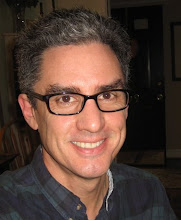
For your approval: my headshot (originally snapped by Tim Brosnan for Mauritius).

Artist Profile Article

Here's a link to an article I wrote for Greenville Business Magazine about the new Artistic/Executive Director of Centre Stage (a great space where I've acted in two great shows, including last fall's Mauritius).

Thursday, July 29, 2010

Contact


Looking up at the blank disc, she thought, “Orange?”

Hovering, just like those books said, somewhere just above the treetops.

She always thought they’d be silver. Not orange.

She fumbled through her purse, then cursed her luck for leaving her camera at home. Now she’d be seen as just another rube, some glory-hungry moron making up stories about flying saucers.

The media would crucify her. The skeptics would scoff. She’d be sent for an evaluation and then a quiet demotion and then unanticipated “budget cuts” would send her packing.

Dammit.

The disc descended, touched the ground, now only a dozen yards away.

She watched, silent, as a door, for lack of a better word, appeared and opened on the surface of the disc.

Will you look at that. A live, gray alien just like all the books described. So angelic, delicate, curious. Friendly. Her heart pounded.

She was witness to a visitor from another planet. She raised her arm, pointed at the alien.

BOOM.

The alien fell backwards, shuddered, then grew still as a pool of orange blood formed around it.

Good thing she’d remembered to pack her pistol.

Tuesday, July 27, 2010

Hawaii Five-0

I posted a short piece with lots of versions of the great great great great great Hawaii Five-0 theme.

It's at Film Score Monthly.

Strung

She strung me up like as much meat, like a dirty gambler in one of those cowboy movies, like a kite in a tree, strung up, deserted, left for dead. Thanks a lot, baby.


This was concocted in 60 seconds after seeing a one word writing prompt at http://oneword.com. 

Thursday, July 22, 2010

Leap


“Mister Darien?”

He opened his eyes, but otherwise didn’t move.

“Mister Darien, do you know where you are?”

He glanced around. He couldn’t move. A woman in a lab coat stared at him. Though not unfriendly, the whole room seemed sterile, clinical. A hospital?

“Mister Darien, can you hear me?”

He nodded.

“Mister Darien, you’ve been through a shock. But I have to ask you this. What year is it? Do you remember what year it is?”

He furrowed his brow and finally croaked out an answer. “1942.”

The woman frowned. He watched her shuffle to some strange high-tech gadgets. She sounded American. But this room, this technology, it seemed so, well, foreign.

“How…” he began, but no more words would come. He felt so drained, so tired. So old.

She nodded. “You were in an accident. Do you remember any of it?”

He strained at the thought. He could feel the rumble of the plane, hear the flak exploding all around. He could see Bains and Ennis heading for the door, ready to jump.

“I’m right behind you!” he remembered shouting, struggling to retighten his parachute rig, then he, too, went to the door and he saw first Bains and then Ennis, torn apart by enemy fire almost before they had a chance to pull open their chutes, then the Lieutenant grabbing him before he could make the leap, shouting at him, telling him the plans had changed, and he could see them shut the door.

But wait. He’d made it. The plane landed safely. Then he could see Becky, her face, their wedding, the kids, he could see their three kids, and the beach house and then his daughter’s wedding and all those years at Upton’s Department Store and his retirement party and he could see the road, the rain-slicked road, and Becky beside him, and his struggle to keep the car on the road, and he felt so old, and he could hear her scream and he looked up at the doctor and now he remembered.

“Becky?” he asked.

The doctor shook her head. “I’m sorry.”

He closed his eyes to 2010 and leaped out of the plane.

Hunger

Karen rushed into the kitchen.

“Mom!”

Her mother let out a sigh and said into the phone, “Hold on a minute.” She gave Karen the eye. “What is it now?”

“Can I have one more donut? Please?” Karen gave her mother the nicest little angel smile she could muster.

“Just take the bag,” her mother said. “And don’t get any of that sugar on your clothes.”

Karen grabbed the bag from the counter and returned to the backyard.

“Okay,” she said as she sat back down at the edge of the sandbox. “There’s only two left, so we can each have one.”

She pulled one out of the bag and held it in the air.

"This is what we call a donut,” she said. “Can you say donut?”

Ambassador Klarn, fifth generation diplomat from the First Federation and sole survivor of the invasion fleet glanced at his warbird, buried in the sand. Then he stared at the girl, the gigantic child, towering over his 6 inch frame. He could feast on that pastry for a week.

He sighed, brushed a fleck of sand from his jacket, and said in his most dignified voice, “Donut.”

Tuesday, July 20, 2010

Diamond Ruby

Thanks again to Twitter, I've just finished reading a wonderful novel.
Diamond Ruby: A Novel
I first started seeing positive chatter about the novel a couple of months before its release. Then I started following the author, Joe Wallace, and read a lot more positive buzz. Two weeks ago I went ahead and ordered it. And I'm so glad I did.

I expected Diamond Ruby to follow the exploits of an 18 year old girl who pitches against Babe Ruth. What I didn't expect was to get totally sucked into this book.

Wallace uses a historians eye to incorporate wonderful detail into Ruby's world. The New York of the 1920s came alive with characters and incidents as Ruby's path encompassed grim survival and triumphant success.

Mid-book I got so caught up in one particular chapter - Ruby's debut performance in the minor leagues - that I had a big, stupid grin plastered on my face the whole time. I wanted Ruby to succeed. I'd been with her through the hard times and reveled in her new role.

Here's what I said over at Amazon, "At once thoughtful, informative and entertaining, Diamond Ruby lives in a very real cross section of 1920s America. Filled with great period details, Wallace spins a yarn that ranges from the tragic to the triumphant. Some chapters had me grimacing while others left me with a big stupid grin on my face. One chapter in particular was absolutely exhilarating in pace, detail and service to the character - I was so enmeshed in Ruby's story that I shared her experience on the pitcher's mound. It was, quite simply, the most fun I've had reading a book in a long time. Thanks, Twitter, for pointing me to this gem of a novel."

Thursday, July 15, 2010

Just Business


“Another moneymaking scheme,” he said. “Great.”

“No,” she said, grabbing his arm before he turned away. ‘This one will actually work. Really.”

He couldn’t even summon the energy to sigh. He simply stared at her, taking in the fiery energy behind her green eyes.

Her smile almost melted him. Her enthusiasm almost sucked him right back in.

Almost.

“Give it up, Karen.”

He set his empty glass on the counter then headed straight for the door.

“Come on,” she said. “I’ve got it all planned out. It’s perfect.”

“Sorry,” he said, closing the door behind him.

She stood still for a long moment, drained her own glass, set it down and retrieved a large plastic bag. 

Using a cloth, she placed his glass into the bag, then set about wiping the doorknob.

She looked around the room then, satisfied, reached for the phone.

“It’s me,” she said. “He’ll be dead within the hour. No, of course, no way to trace anything back to you. Or me. I’ll expect to see the other half in my account first thing tomorrow morning, before my flight leaves.”

She smiled. “Nice doing business with you, too, ma’am.”


Thursday, July 8, 2010

Seduction


She looks into his eyes

Green. No, blue. Turquoise?

“Kiss me,” she says.

A sigh.

“You know I can’t.”

“You never will if you don’t try.”

“It doesn’t work that way anymore!”

He rolls over.

She pats his jellied limb.

“I know. I’m sorry.”

She rolls to the mirror, sighs, rummages through the top drawer for her brown eyes. She pops out a blue one, tosses it into a glass of Efferdent, sticks a brown one into the socket. Then she does the same for her other eye. And for her other one.

He never could resist her brown eyes.

Friday, June 25, 2010

On Deck


She glanced over the bow.

Nothing.

“Carroway!”

No response.

She sighed. No use. May as well give it up. There’s no way he could have survived out there this long. 

No way.

“Carroway!”

Nothing.

She turned, slowly, so slowly. She took a few steps toward the wheelhouse. She looked back, scanned the horizon.

Nothing.

She kicked the door open and planted herself at the wheel. She hesitated another moment before cranking up the engines.

Done. This is it.

No more.

Last trip.

Ever.

She spun the wheel, headed toward the mainland.

Stupid.

She never should have left him alone. Never.

She knew better. What a stupid, rookie mistake.

Thump thump thump.

A new sound, one she hadn’t heard from this trusty old scow.

Thump thump thump.

Something bouncing. Metal.

Metal.

Of course.

So stupid.

She slowed the engine, scanned the deck of the wheelhouse, spotted the revolver.

Sighing, she grabbed it, strolled out of the wheelhouse, tossed it into the deep.

Better clean that stray spot of blood, too, before she made it back to the dock.

Done.

Last trip.

Ever.


Monday, June 21, 2010

The Associates

I loved The Paper Chase. It arrived on TV in 1978 and, a critical darling but ratings nonstarter, lasted only one season.

So, being the kind of person I am, I tracked down the book (by John Jay Osborn Jr.) that inspired it. I read it. I loved it. I read it again. I've probably read it three times over the years.

The show returned to TV for a second and third season on Showtime, and I had the good fortune to have Showtime then and got to watch them all.

I really liked the character Hart, the protagonist, the Iowa boy now struggling through law school.

Did I mention I grew up in Iowa?

Anyway, in the throes of Paper Chase fever, I purchased another novel by the same author, The Associates.

I stuck it on my shelf, planning to read it.

Flash forward two or three decades.

I grabbed The Associates from my shelf last week. I read it.

It's the story of a guy just starting out in a big NY law firm. He confronts some stereotypical partners and falls in love with a fellow associate at the firm, a headstrong divorcee.

The book is written in a chunky, episodic style and suffers a little from being, well, very seventies. The characters, their assumptions, their stereotypes, all belong to another age. It took a long time for me to get drawn in to the novel, and I did end up enjoying it, but nowhere near on a Paper Chase level. If nothing else, its depiction of the pressures involved with working in a big law office made me happy my Paper Chase induced flirtation with going to law school never panned out.

Structurally, I can see similarities to the arc of The Paper Chase - a young midwest guy as fish out of water, romance with a "liberated" gal, a wise but distant mentor, a philosophically minded pal, a race to conclude a big law project, the discarding of traditional values at novel's end. But The Associates just never clicked for me. I can see, however, why the novel spawned a(nother short-lived) TV series, since the set up and broad strokes of young folks versus partners plus political and romantic tensions has a strong appeal (and I suspect L.A. Law somewhat fulfilled this).  Fun fact: the TV series starred a young Martin Short.

As a novelist, Osborn ended up penning one more (which I wouldn't mind reading - I like Osborn's style), then seems to have given it up, remaining a law professor. Kingsfield's shadow looms large, and it seems Osborn ended up trying to step into his creation's footsteps.
Friday, June 18, 2010

Office Politics

She walked by my cubicle without so much as a glance.

Nice.

Three years together, two years of being just plain coworkers on top of that, and it ends like this.

Snubbed.

I stood, peeked over my back wall.

“Medlin.”

He glanced up, raised his eyebrows in reply.

“Hand me a donut.”

His eyes returned to his screen but his hand held up a Powdered Sugar Delite.

"Thanks.”

I accepted the donut, held it gingerly, trying my best to avoid sugary dandruff.

Fifteen feet away, she stood at the copier, her back to me. I could hear the CHUNK Wok-Wokka CHUNK rhythm of collating papers.

I judged the weight of the Powdered Sugar Delite, the distance to the copier, the folds in the dark navy blouse she loved so much.

I let it go.

It hit the bulletin board, leaving a halo of sugar on the Equal Opportunity in the Workplace poster, bounced off the top of the copy machine and landed on the break room counter.

She didn’t move.

Her collating job finished. She gathered her papers, plucked the donut from the counter and whirled around.

As she walked past me, she slowed ever so slightly, opened her full lips and shoved the donut into her mouth, licking her lips as she glared into my eyes.

She disappeared around the corner.

I frowned, then shouted. “Made you look!”